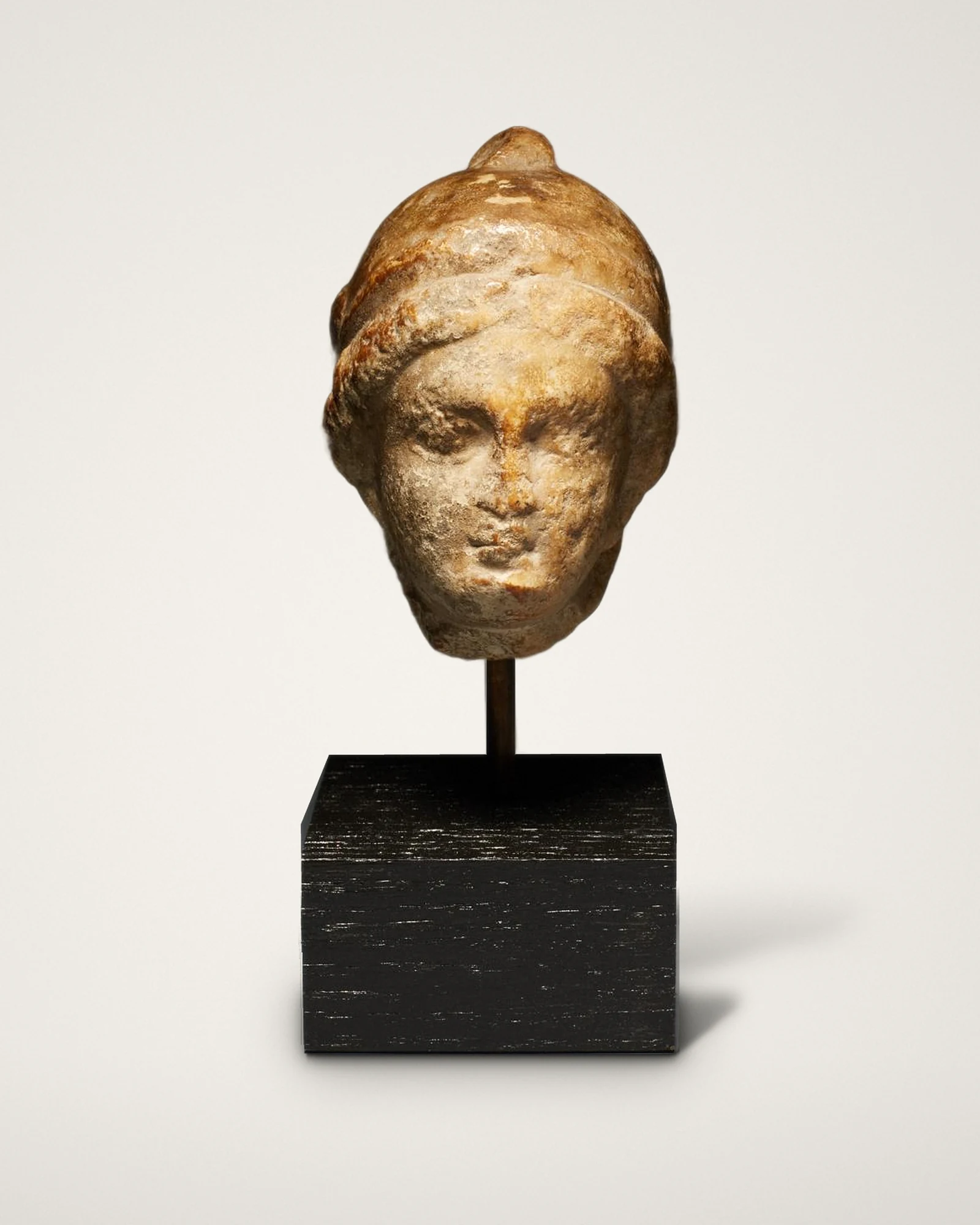
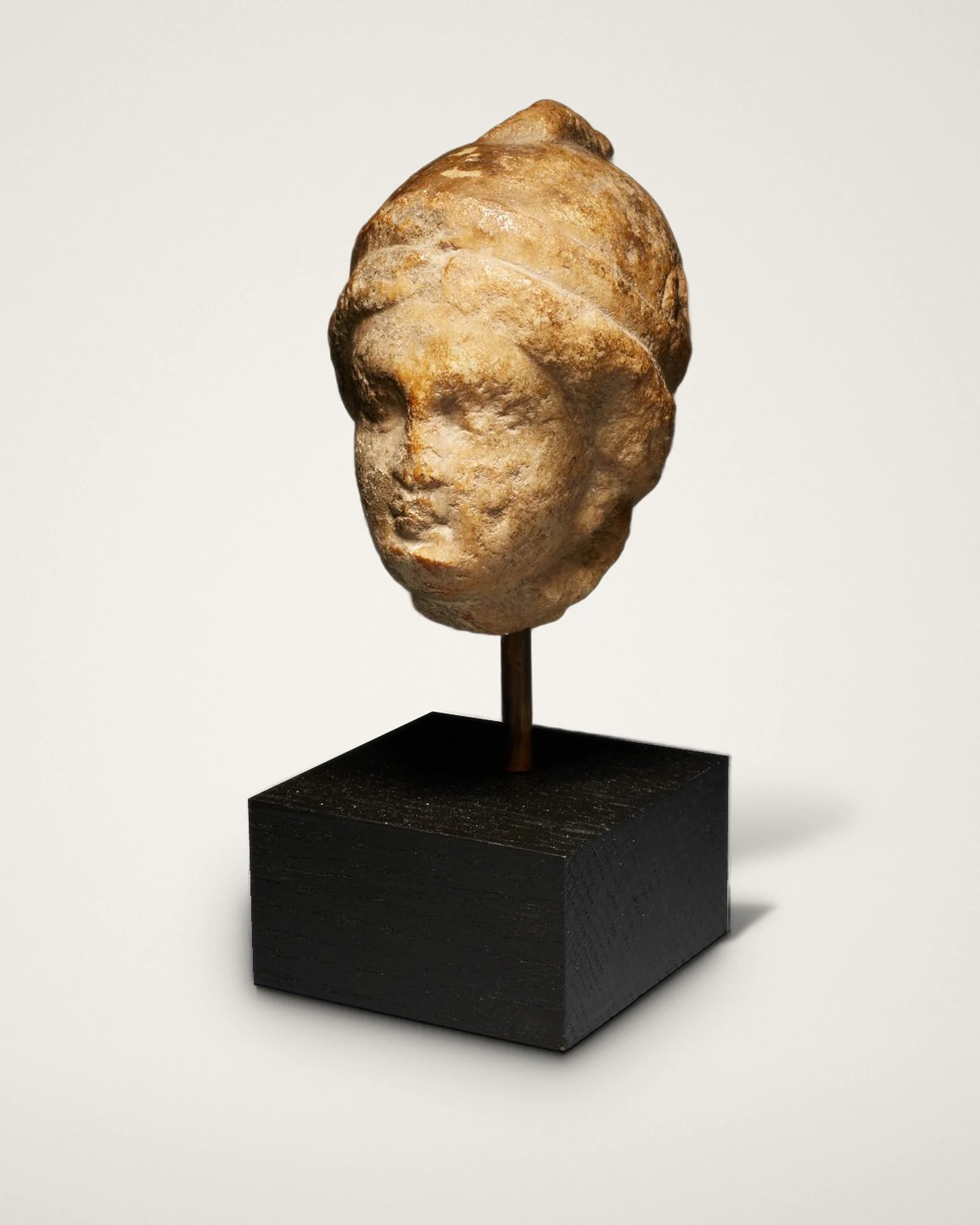
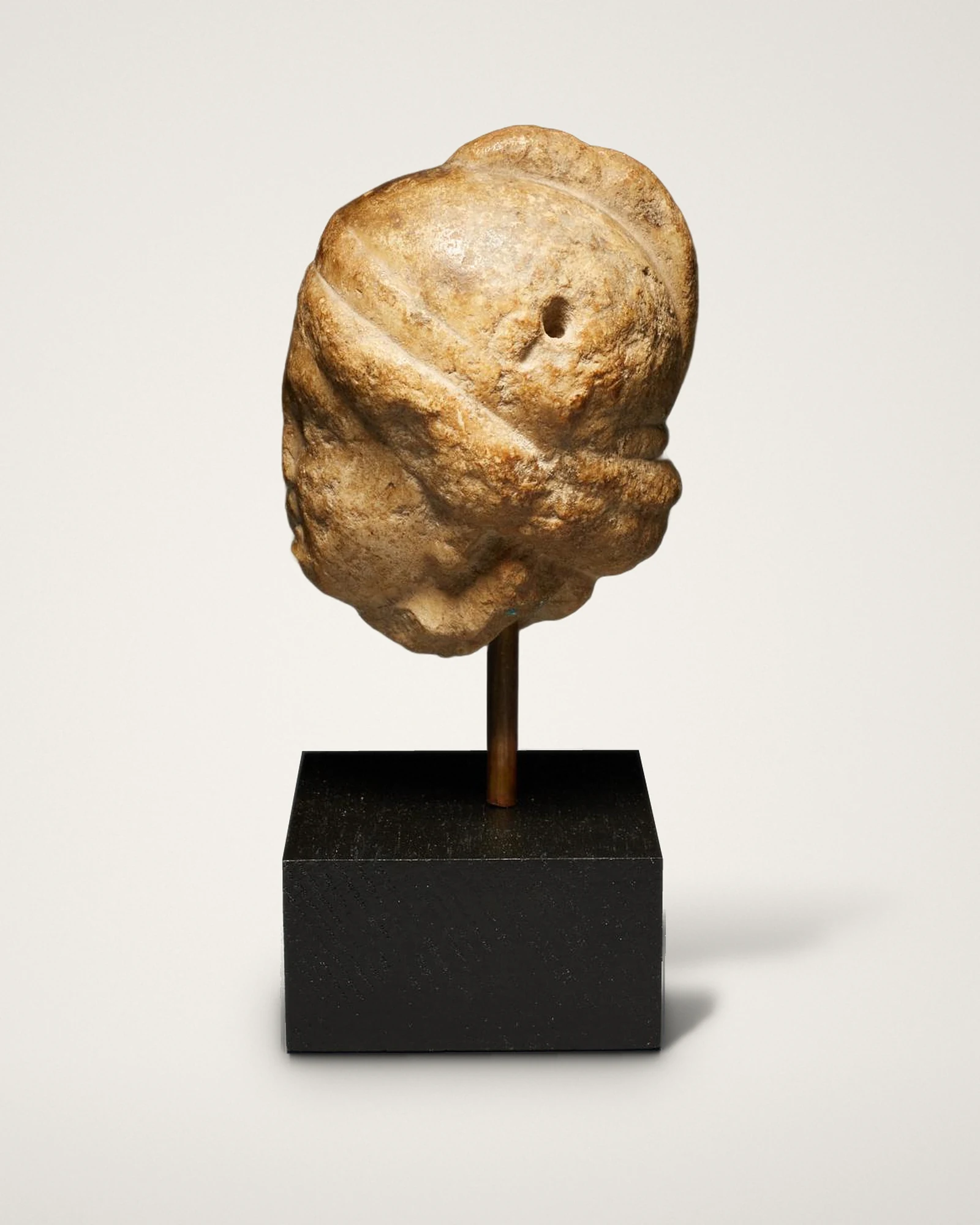
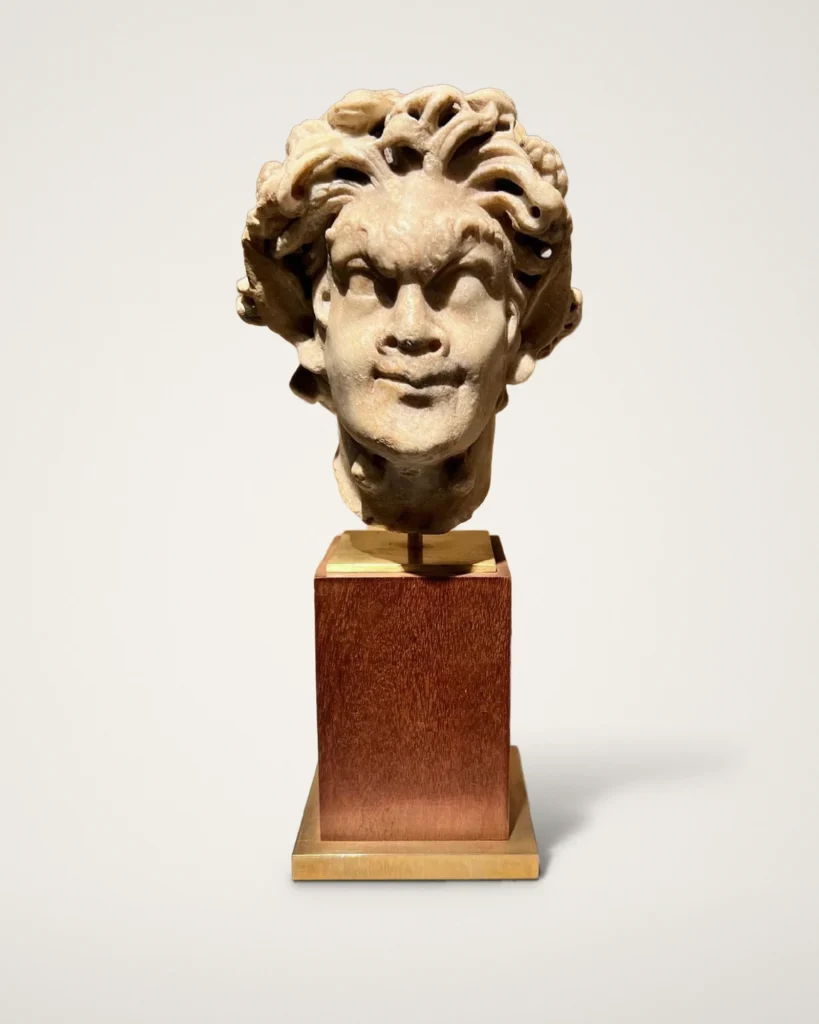
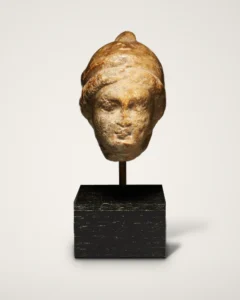
A Roman marble head of Athena, goddess of wisdom and protector of cities, carved during the Imperial Period. The goddess is shown wearing her characteristic helmet, pushed back on the head and rising to a rounded crest, beneath which soft locks of hair frame the forehead and temples.
The face follows the idealised canon inherited from Classical Greek sculpture, with a full oval shape, almond-shaped eyes, a straight nose and a small, gently closed mouth. The serene, detached expression reflects the divine dignity with which the goddess was traditionally portrayed.
The surface shows a warm patina with ochre and golden tones, the result of centuries of burial, which softens the features and gives the marble a rich, luminous quality. Small-scale heads like this one often belonged to statuettes intended for domestic shrines or private devotion, testifying to the enduring popularity of Athena, known to the Romans as Minerva, throughout the Empire.
The head is presented on a black wooden base with a metal rod.