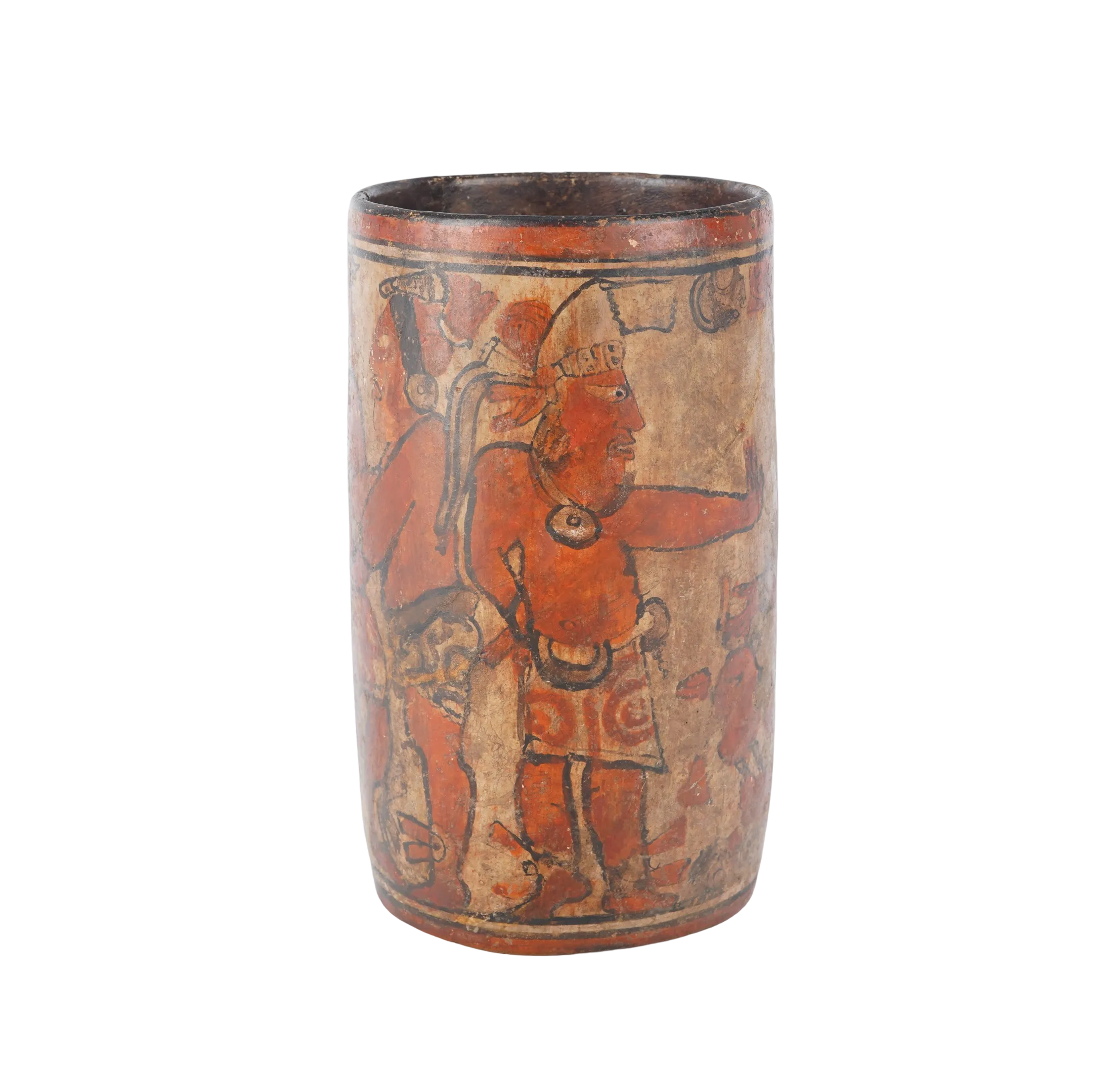
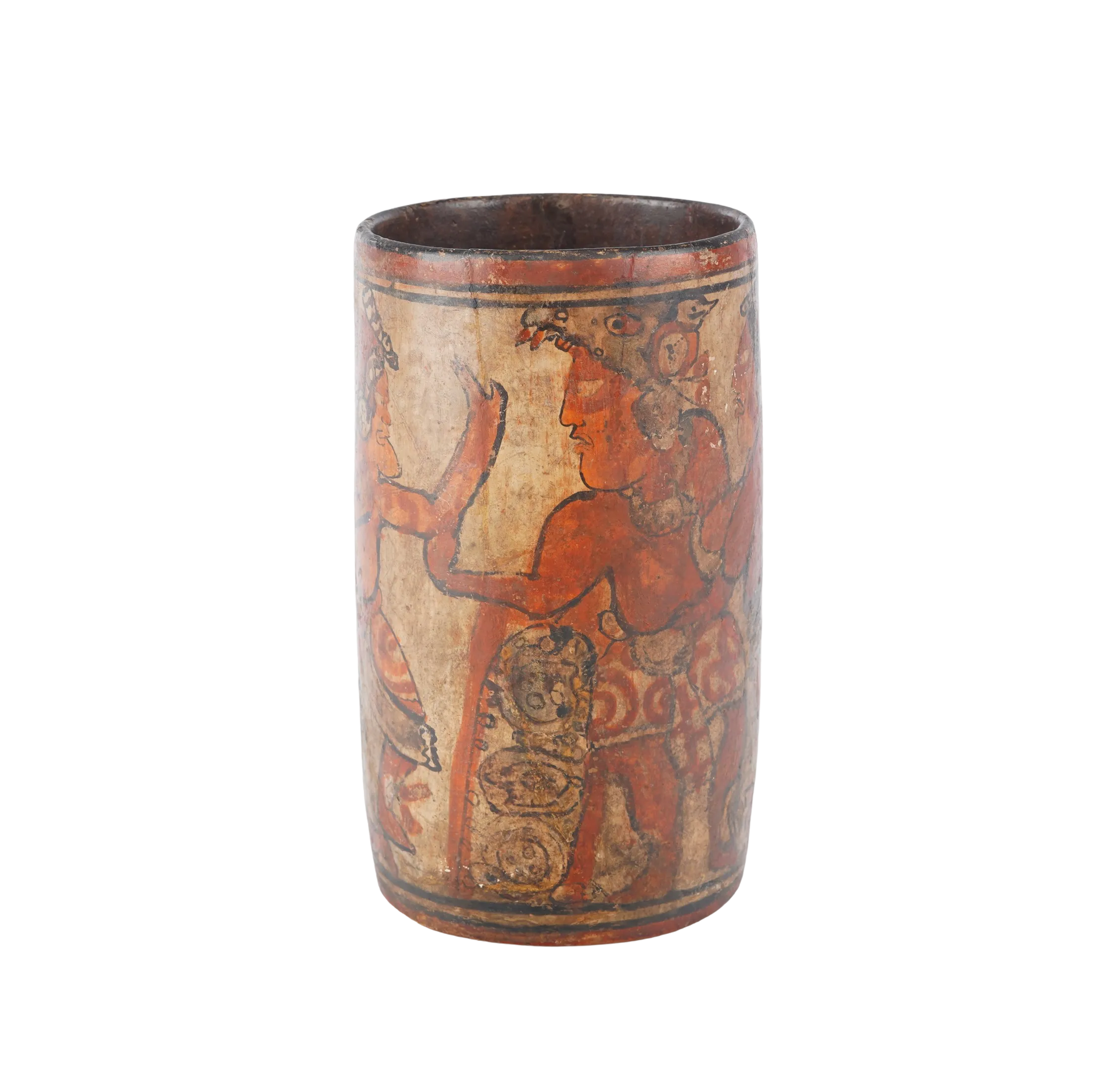
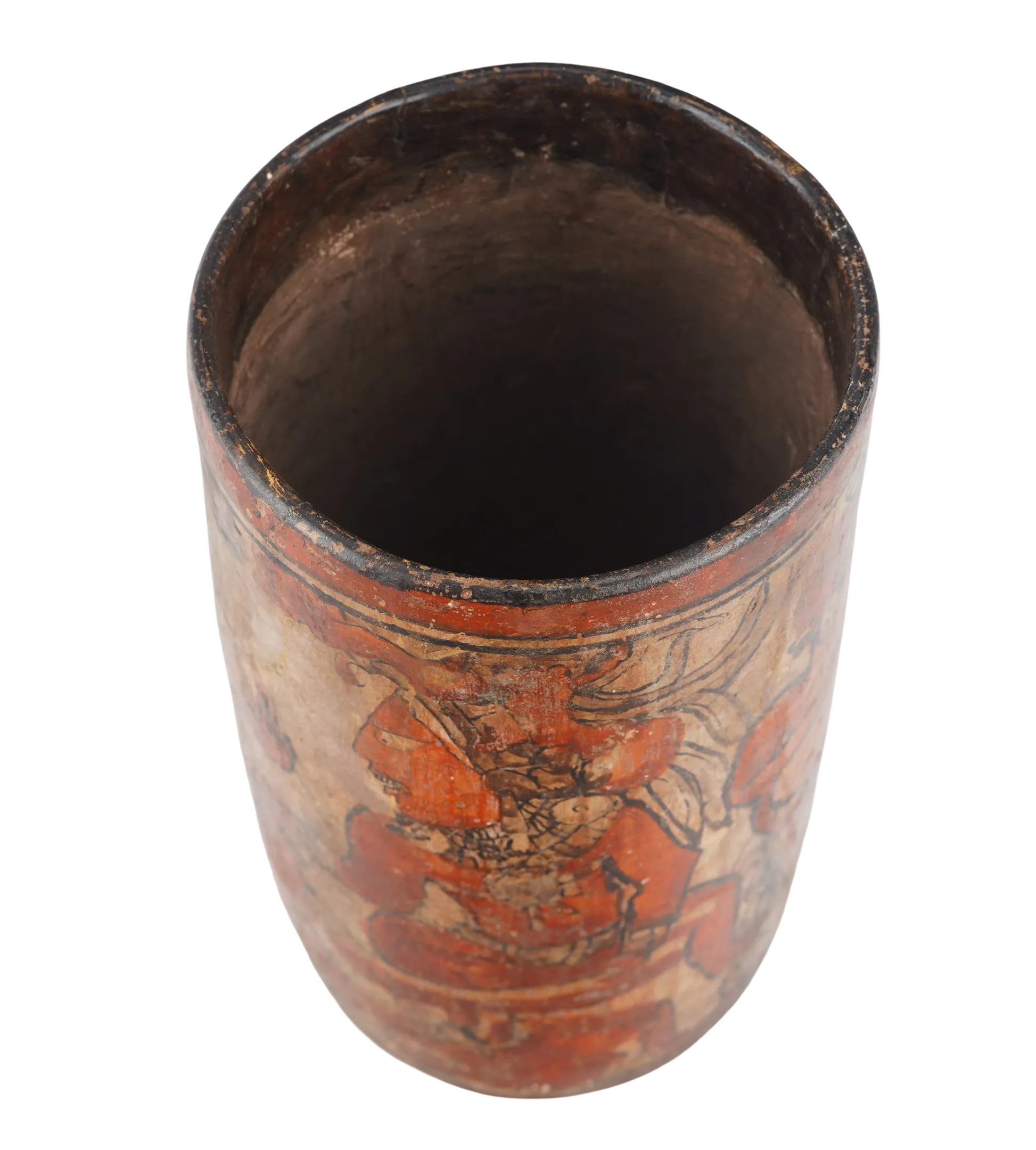
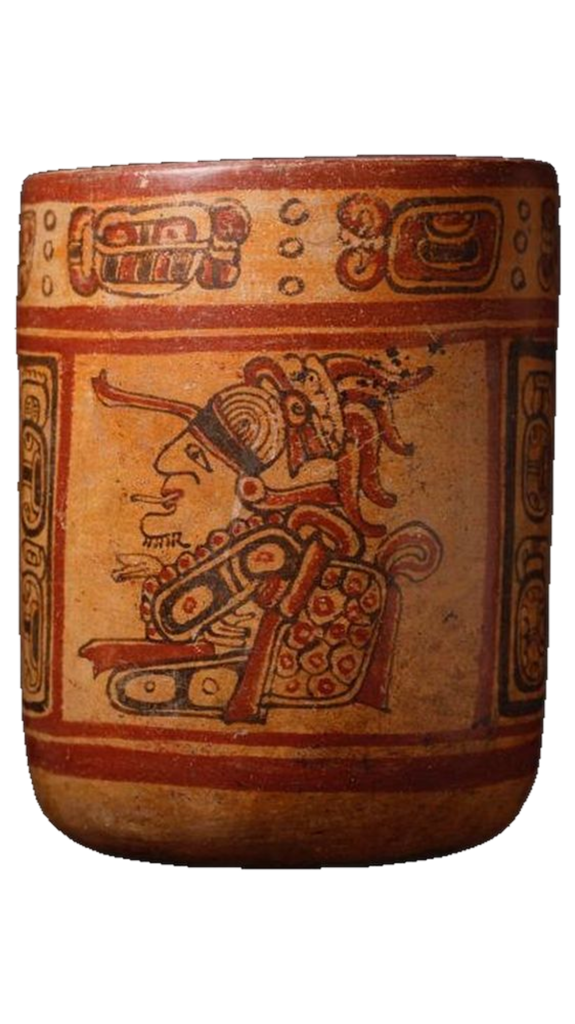
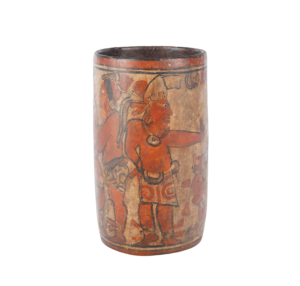
Maya polychrome vessel of Codex style, executed in terracotta and attributed to the Petén region of Guatemala, one of the principal cultural and artistic centers of the Maya lowlands. The vessel belongs to the sophisticated tradition of painted Maya ceramics, in which the surface of the vessel was transformed into a highly refined pictorial and narrative medium.
The decoration of Codex-style vessels is characterized by a distinctive visual language inspired by the pictorial conventions of Maya manuscripts. Their compositions could depict deities, members of the ruling elite, supernatural beings, ritual activities, and mythological episodes, often combining figurative imagery with symbolic motifs and hieroglyphic inscriptions. The precise line work and carefully applied polychrome decoration reflect the exceptional technical and artistic abilities of Maya ceramic workshops.
Vessels of this type were closely associated with elite and ceremonial contexts. They could have been used during banquets and ritual gatherings, serving as containers for beverages, food, or other substances connected with ceremonial practices. Beyond their practical function, their elaborate imagery conveyed important aspects of Maya mythology, cosmology, social hierarchy, and religious thought.
Measuring approximately 19 × 11 cm, the present vessel retains the characteristic proportions and decorative tradition of Codex-style Maya ceramics. Its cultural and artistic significance is further supported by a thermoluminescence dating certificate issued by Brussels Art Laboratory, as indicated by the auction house.
An important example of Maya polychrome ceramic art from the Petén region, the vessel illustrates the close relationship between ceramic production, elite culture, ritual practice, and the sophisticated visual storytelling tradition of the ancient Maya.