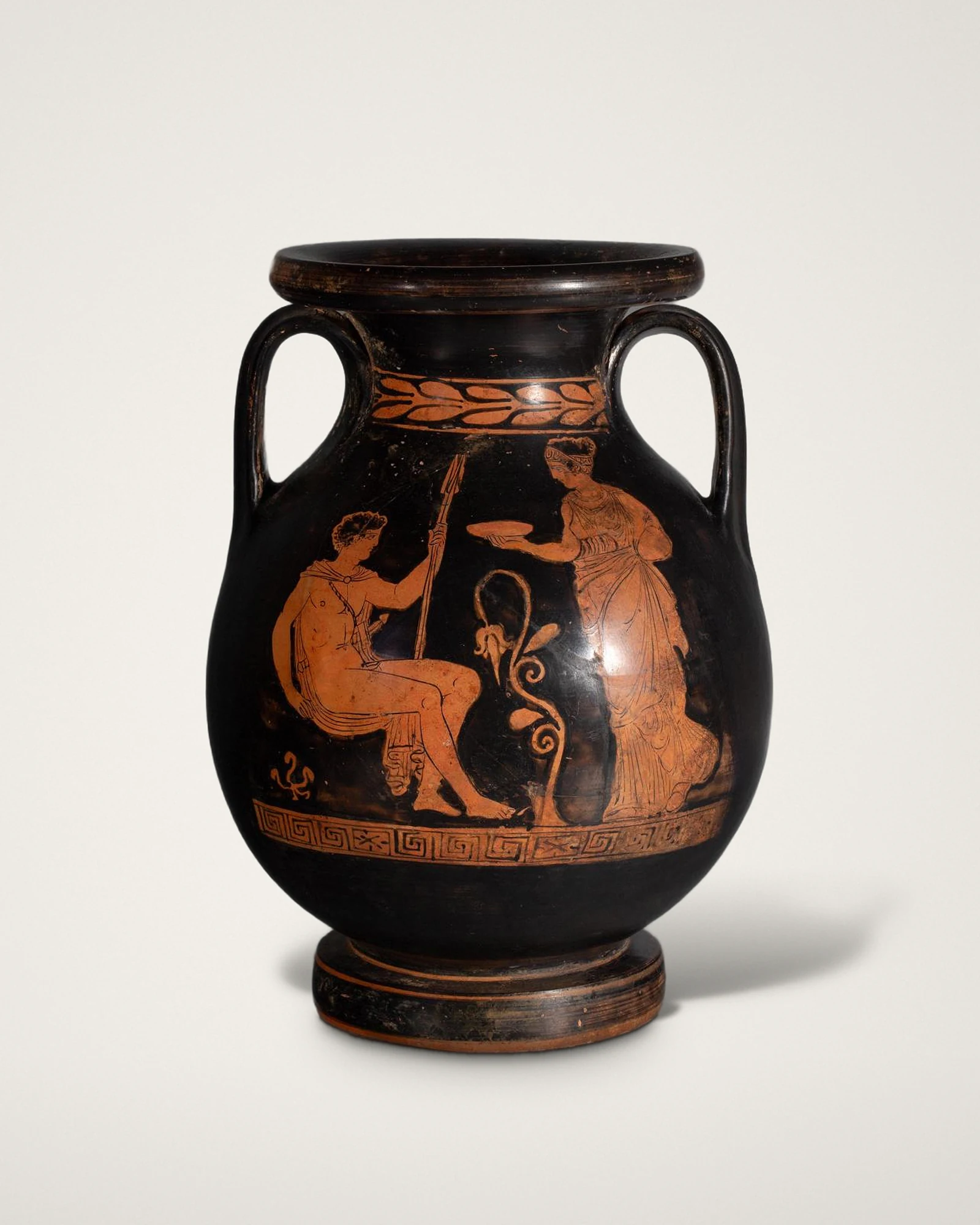
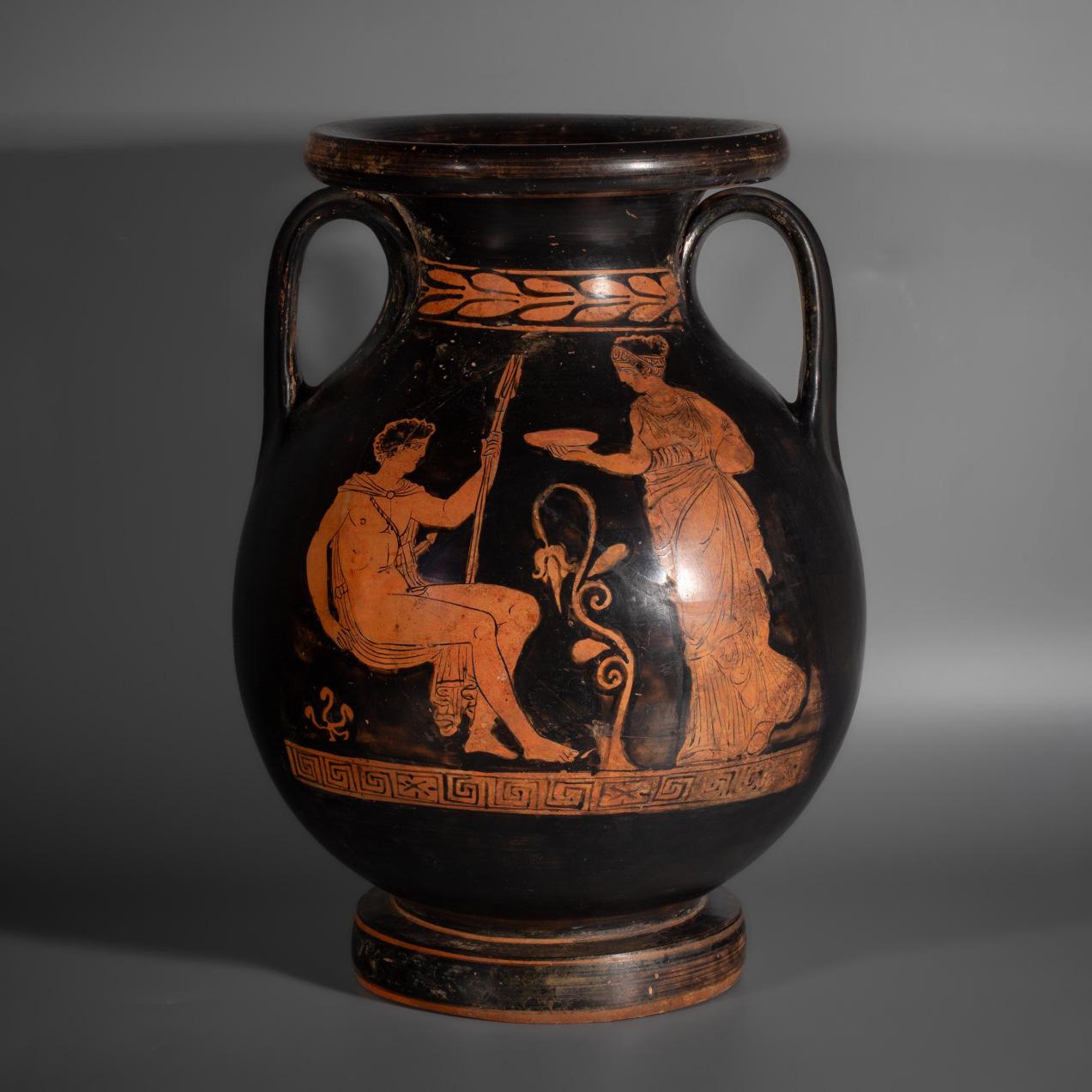
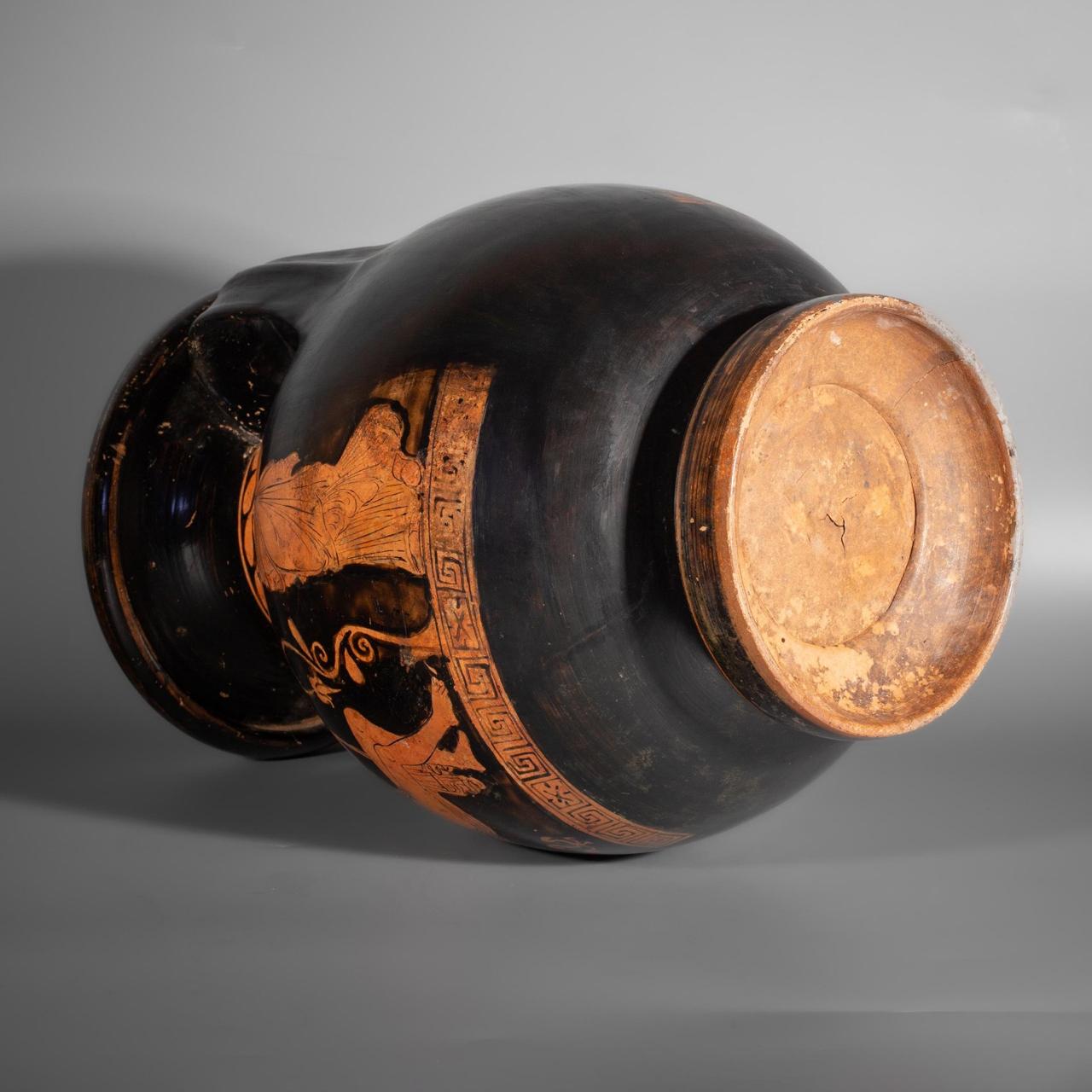
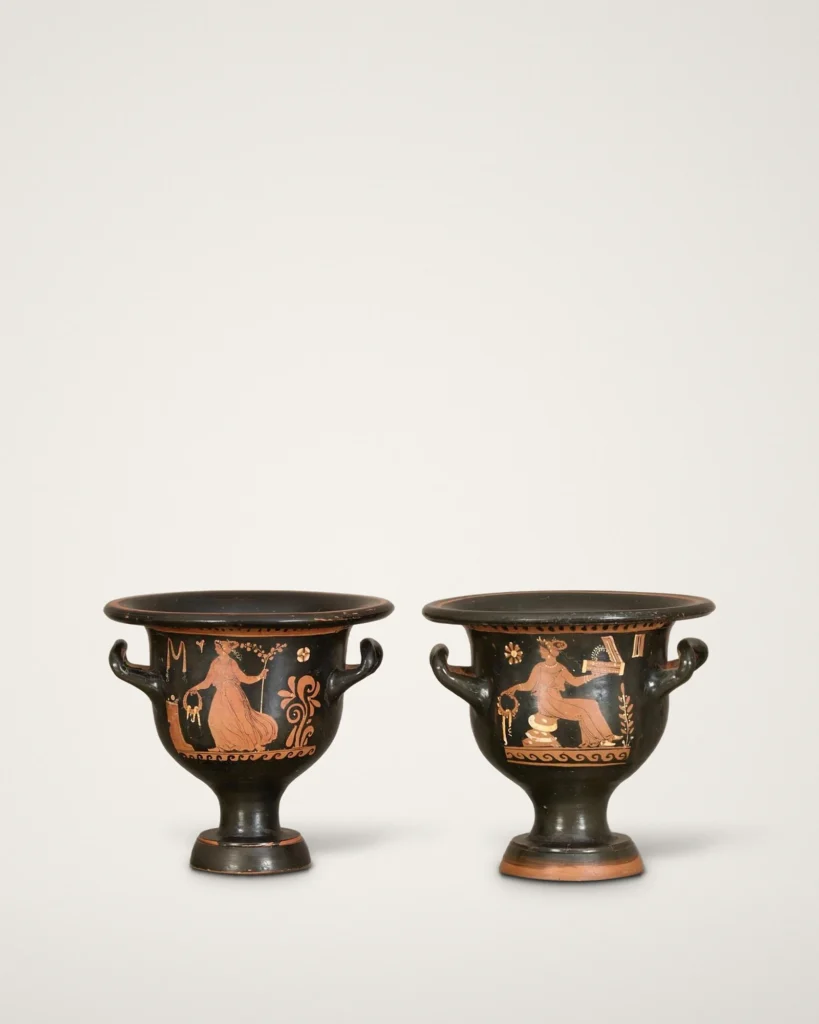
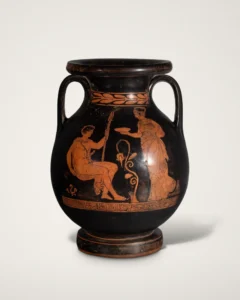
An Apulian red-figure pelike from the 4th century BC, a type of storage vessel with a broad, sagging body, flared mouth and two vertical handles rising from the shoulder to the neck. The neck is decorated with a band of laurel leaves, while the figurative scene rests on a groundline of meander interspersed with saltire squares.
The main side shows a young man seated on draped folds, nude except for a mantle fastened at the shoulder, holding a spear upright in one hand. Facing him stands a woman dressed in a finely pleated chiton and himation, her hair bound in a fillet, offering him a phiale, a shallow dish used for libations. Between the two figures rises an elegant floral tendril, a motif characteristic of Apulian vase painting, and a small rosette fills the field behind the youth.
Scenes of offering and encounter between a youth and a woman were among the most popular subjects in South Italian workshops. They are often linked to funerary or ritual contexts, where the libation evokes honour, farewell or devotion. The fine drawing of the drapery and the balanced composition reflect the refinement of Apulian red-figure production,