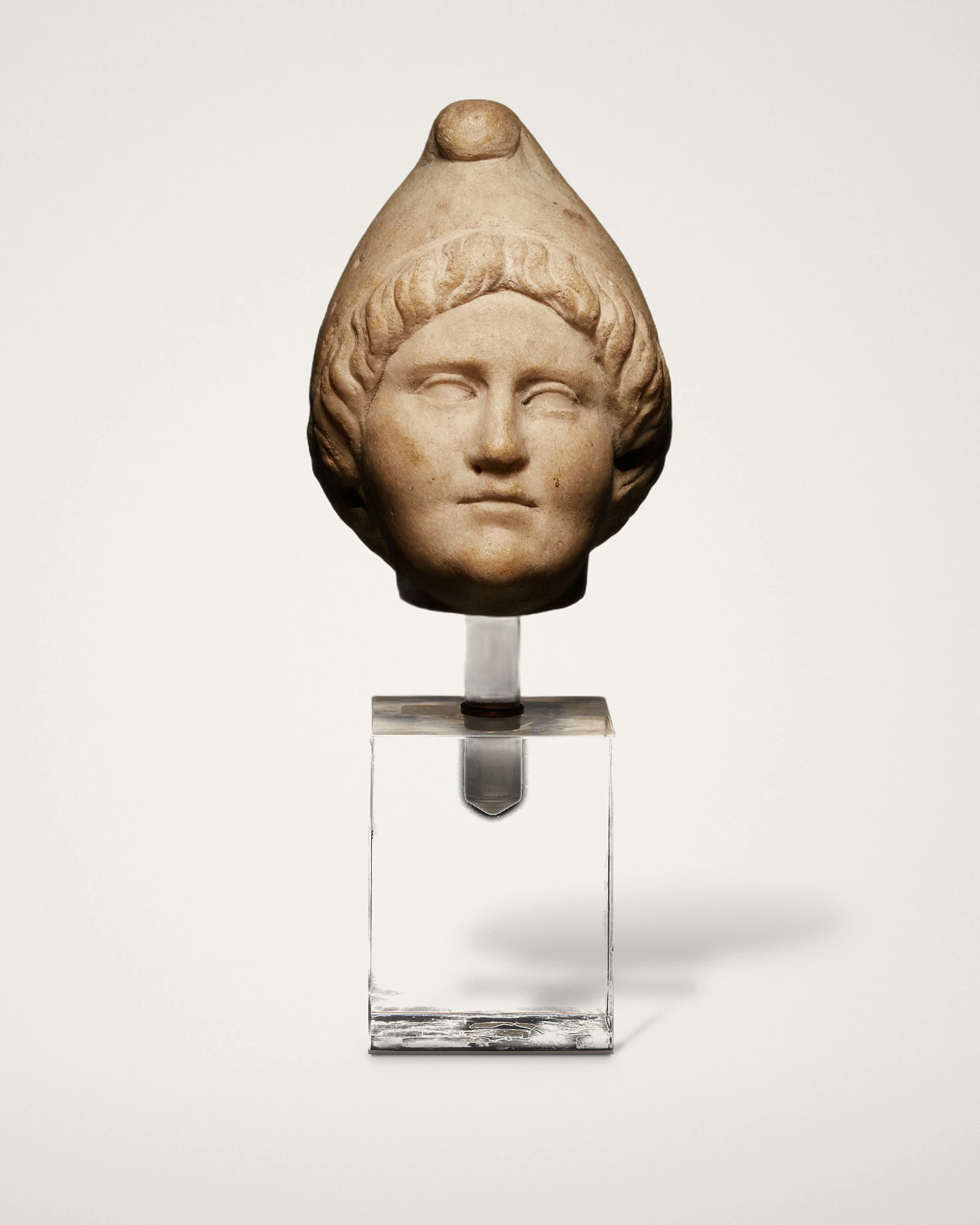
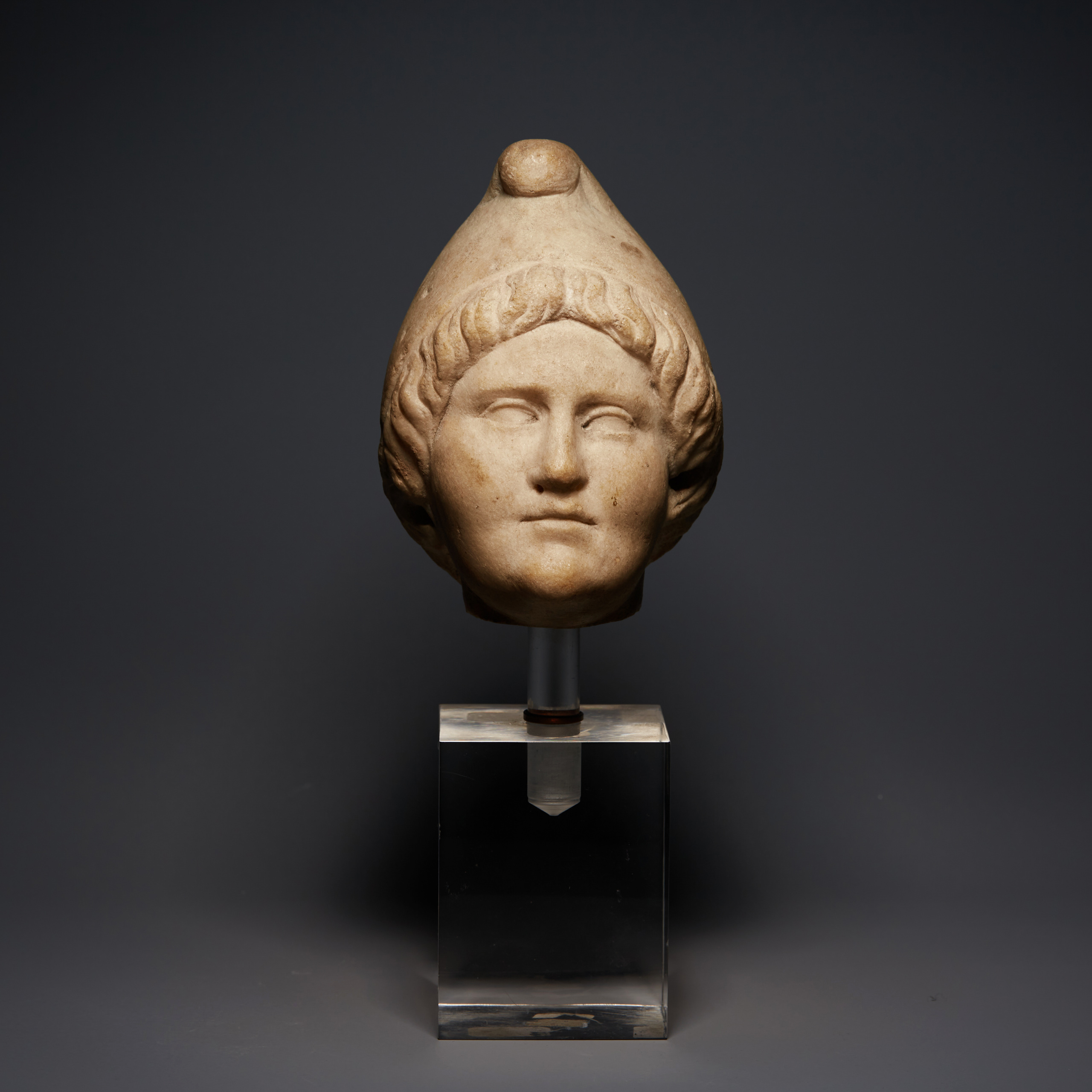
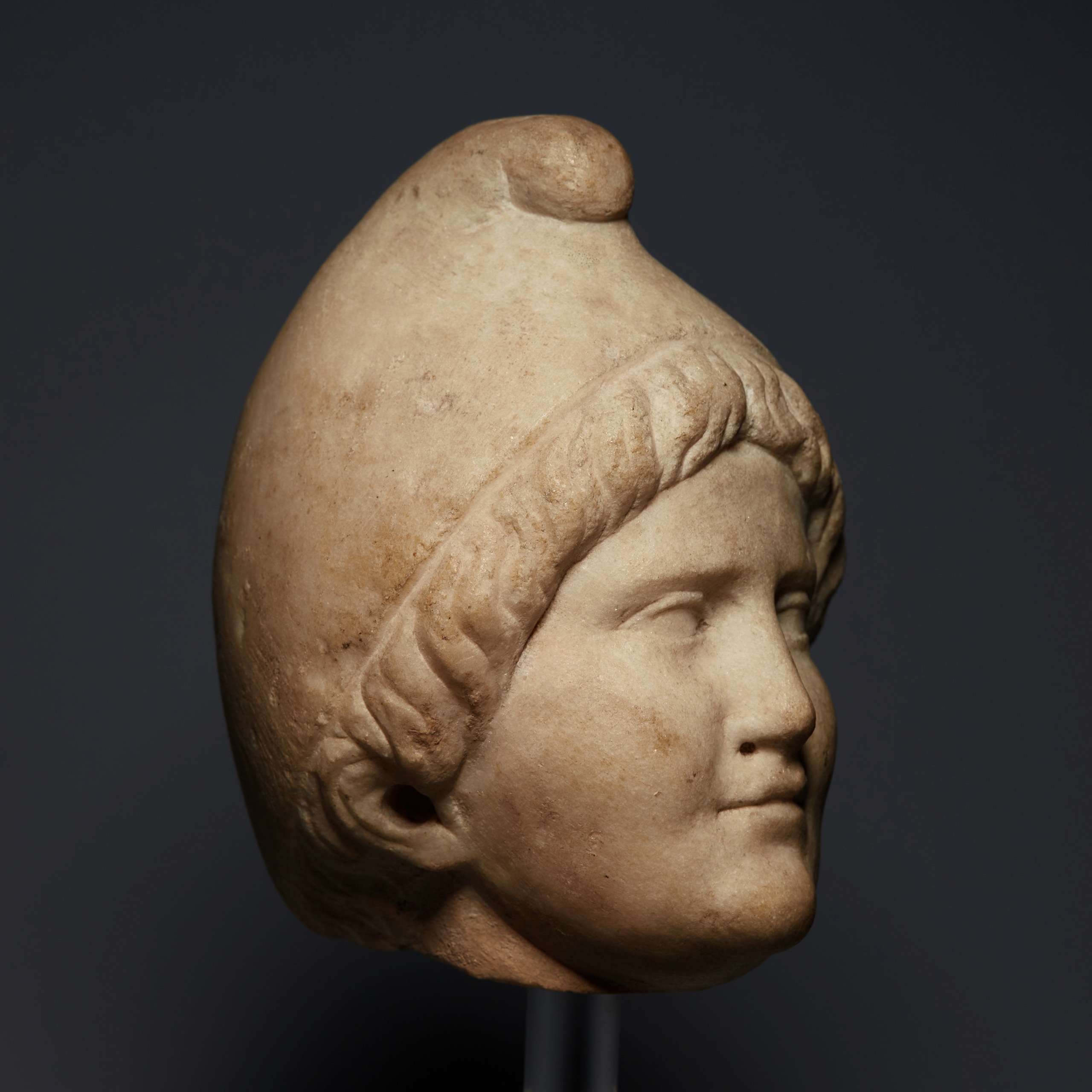
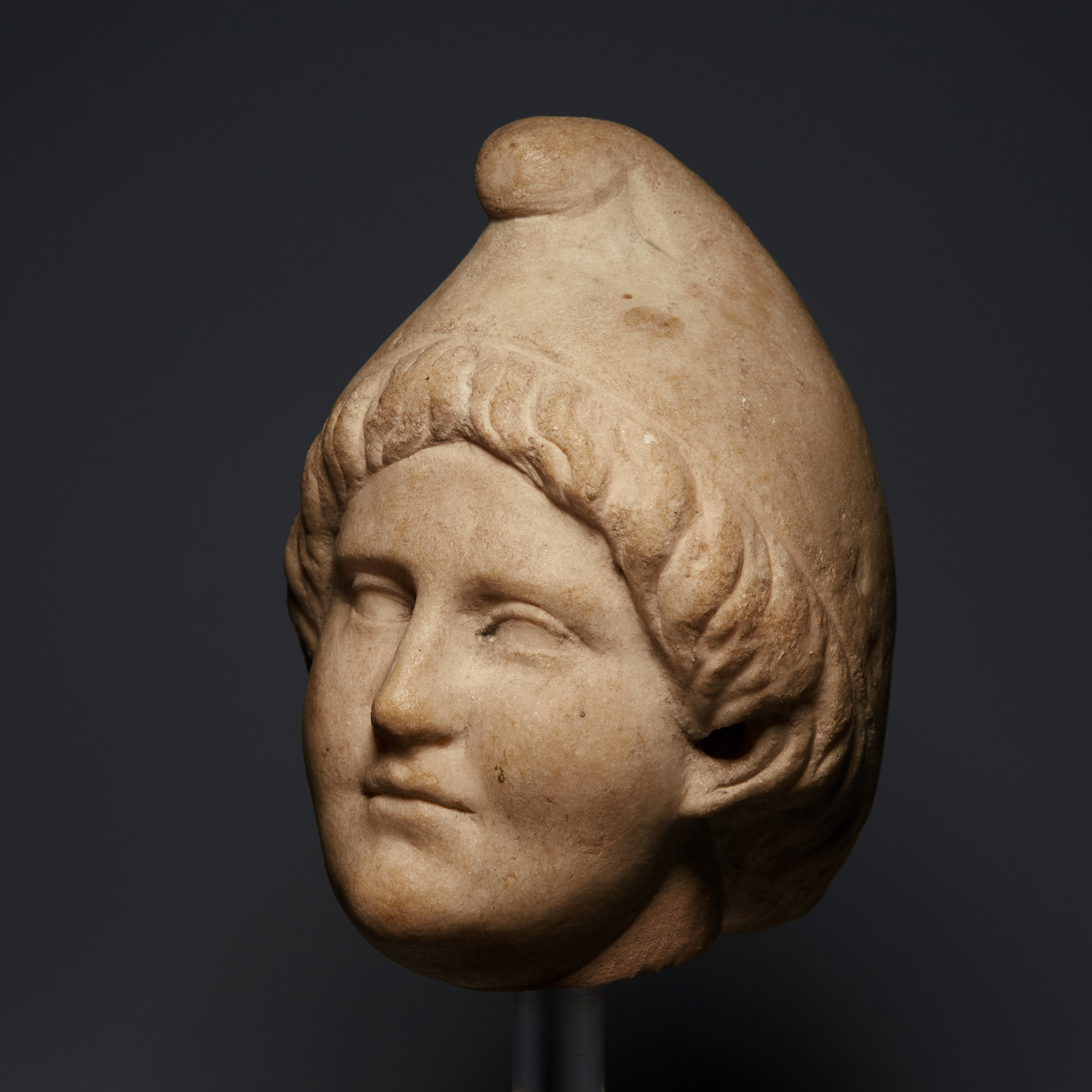
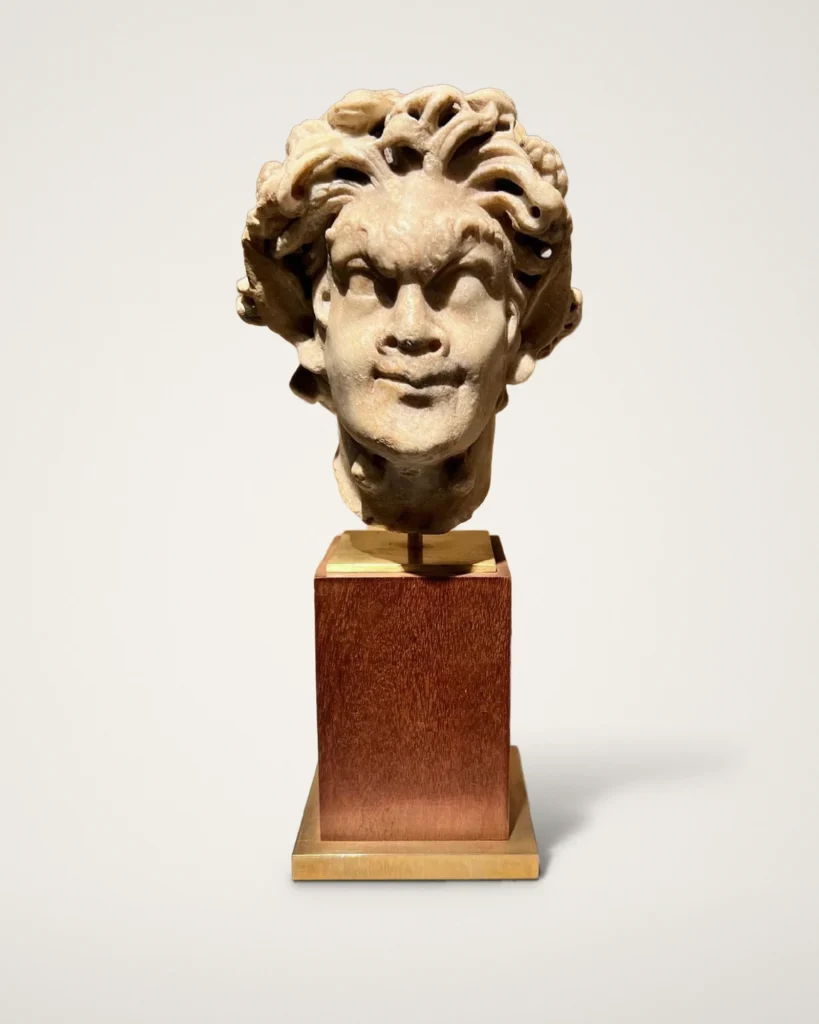
This fully sculpted head in the round depicts the face of the god Attis, as indicated by the presence of the Phrygian cap. The work stands out for the quality of its carving, with delicate, rounded forms. However, the features also reveal a lack of idealisation in favour of greater realism, a characteristic commonly found in Roman sculpture of the 2nd and 3rd centuries AD, when its aesthetic had moved away from the ideals of Greek statuary.
This fully sculpted head in the round depicts the face of the god Attis, as indicated by the presence of the Phrygian cap. The work stands out for the quality of its carving, with delicate, rounded forms. However, the features also reveal a lack of idealisation in favour of greater realism, a characteristic commonly found in Roman sculpture of the 2nd and 3rd centuries AD, when its aesthetic had moved away from the ideals of Greek statuary.
Attis was a god of vegetation, symbolising its disappearance and renewal. He personified the fleeting yet recurring spring. Originally from Phrygia, he was adopted by the Greeks and venerated by the Romans. He represents nature dying in autumn and being reborn in spring. This Eastern deity originated in Phrygia, and several versions of his mythological legend are known, all of which emphasise his death through self-castration and subsequent resurrection. He was regarded as the lover of the goddess Cybele.
In the Roman world, representations of Attis have been found across a wide range of artistic forms, particularly sculpture. His iconography is highly varied, as the deity appears in different poses, sometimes alone and at other times alongside Cybele. This diversity reflects the desire to portray the god at the most significant moments of his myth or to convey ideologies with symbolic and religious meaning through his image. Particular attention should be given to representations of Attis as a protective deity of the deceased and their resurrection. In this context, he is depicted independently of Cybele, having himself experienced suffering and death and ultimately overcome them.
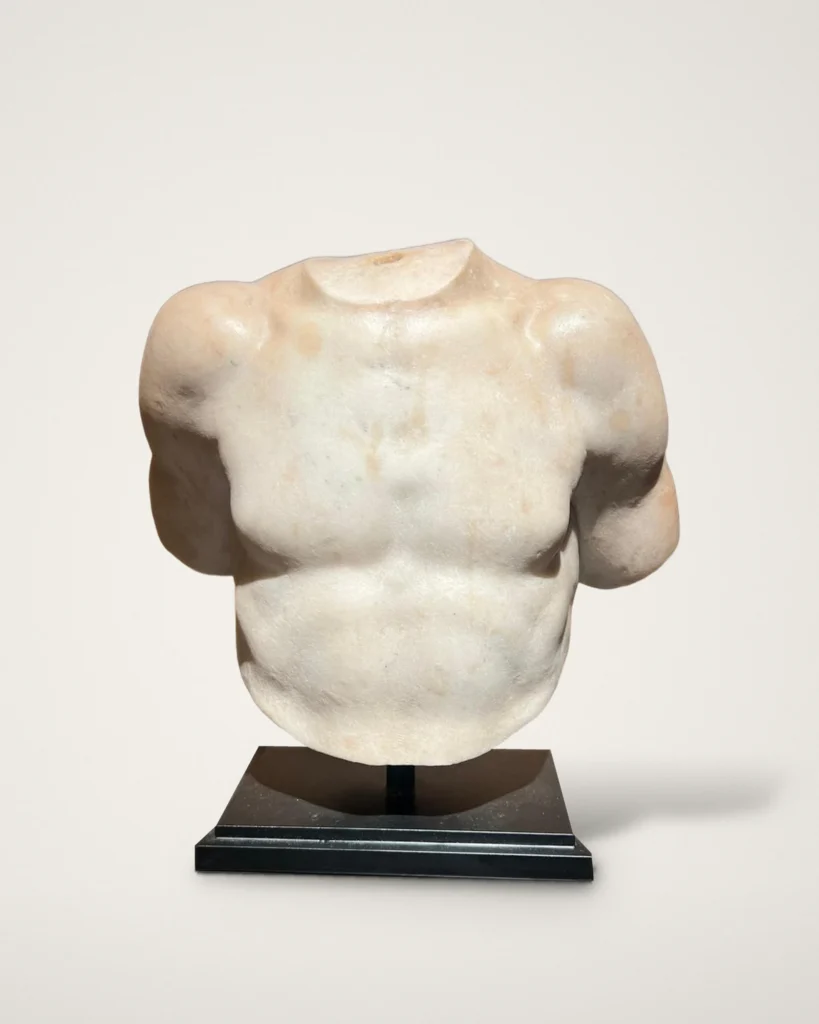
Roman sculpture distinguished itself from Greek sculpture particularly through the development of portraiture. Roman portraiture drew on Etruscan art, as well as the Hellenistic Greek tradition and the imagines maiorum — wax masks made from the faces of the deceased to preserve their likeness for remembrance and subsequent veneration. The materials most commonly used in Roman portraiture were bronze and marble. Initially, Roman portrait sculpture depicted only the head and part of the neck. Later, representations expanded to include the entire bust, incorporating the shoulders and chest. Nevertheless, full-length sculptures were also produced, as exemplified by the work presented here.